


If there was one thing every business struggled with, it was keeping everything in sync.
Teams worked hard, customers expected instant responses, and data was scattered across calls, spreadsheets, emails, and WhatsApp messages.
That was exactly where a modern CRM steps in.
A CRM in 2025 wasn’t just a database – it became every business’s backbone.
It helped teams stay aligned, automated the small tasks that ate up time, and gave a clear picture of what was happening across departments.
And the best part?
It worked beautifully across industries.
Let’s break down how CRM made a real difference in different sectors in 2025.
1. Healthcare: Faster Processes & Better Patient Care
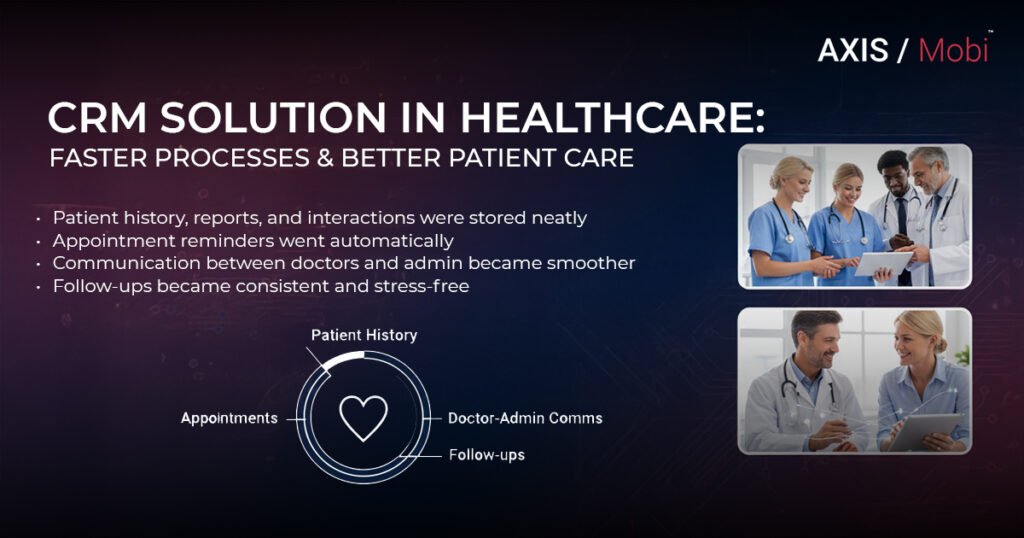
Healthcare teams dealt with everything at once – appointments, records, test results, follow-ups, and more.
A CRM brought all of this together in one place.
What it improved:
- Patient history, reports, and interactions were stored neatly
- Appointment reminders went automatically
- Communication between doctors and admin became smoother
- Follow-ups became consistent and stress-free
A patient walked into a clinic where the staff already saw their full history, past reports, and upcoming tests – no searching, no delays. The doctor reviewed everything before the consultation, the system sent automatic reminders afterward, and follow-ups happened on time without anyone chasing.
That’s how CRM turned healthcare into a smoother, faster, and more organized experience for everyone.
Testimonial/feedback:
With a 360-degree patient view, we’re able to meaningfully engage, empower, and support patients throughout their cancer-care journey.” – Vineesh Ghei, Chief Sales Officer, HCG, after adopting Healthcare CRM.
2. Education: Organized Admissions & Happier Students
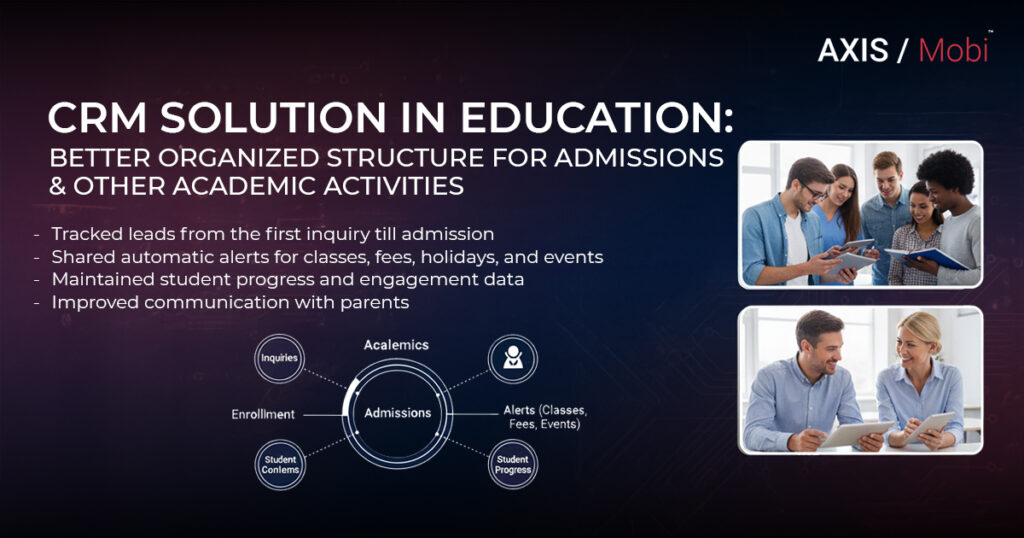
Schools, colleges, coaching institutes, and ed-tech platforms managed huge volumes of inquiries daily.
A CRM removed the chaos and kept everything structured.
What it helped with:
- Tracked leads from the first inquiry till admission
- Shared automatic alerts for classes, fees, holidays, and events
- Maintained student progress and engagement data
- Improved communication with parents
An inquiry came in, and it was instantly captured. Counsellors knew exactly whom to follow up with, parents got timely updates about classes and fees, and teachers tracked every student’s progress from a single dashboard. No scattered data, no missed communication.
That’s how a CRM kept admissions organized and student management seamless.
Testimonial / Feedback:
From an education institution using CRM, one admin noted:
“After we implemented CRM for admissions and student tracking, follow-ups never slipped: every inquiry turned into a lead, and parents were always updated on time.”
3. Finance: Secure, Accurate & Compliant
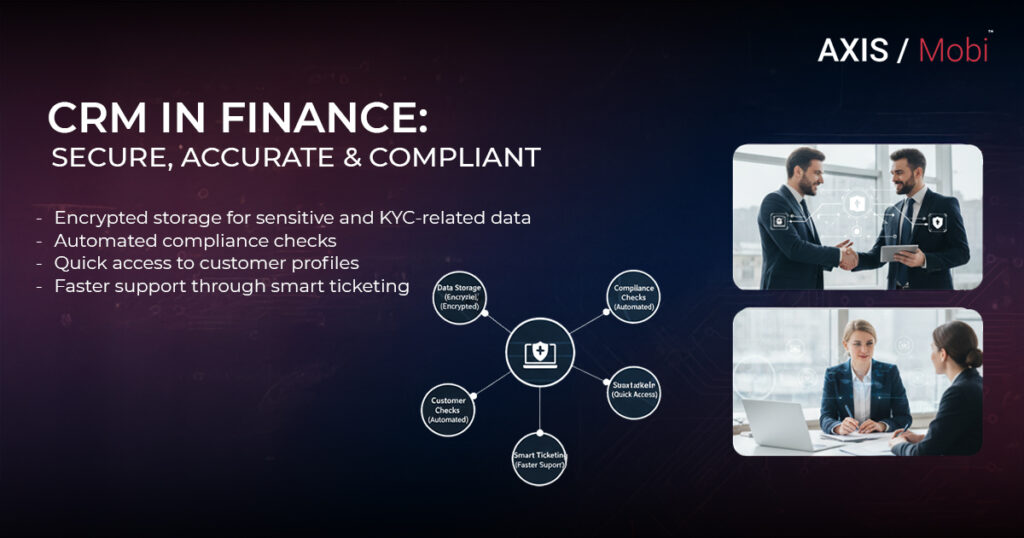
Financial institutions could not afford errors – everything needed to be documented and secure.
A CRM made the process simpler and safer.
It enabled:
- Encrypted storage for sensitive and KYC-related data
- Automated compliance checks
- Quick access to customer profiles
- Faster support through smart ticketing
A query popped up on the finance team’s dashboard, and with one click they could see the customer’s KYC, documents, past conversations, and status updates – all securely stored. No digging through emails or folders. The system ran compliance checks on its own, flagged anything important, and created a support ticket if needed.
Everything felt smoother, cleaner, and faster, just the way a modern finance team should operate.
4. Retail: Smarter Marketing & Loyal Customers
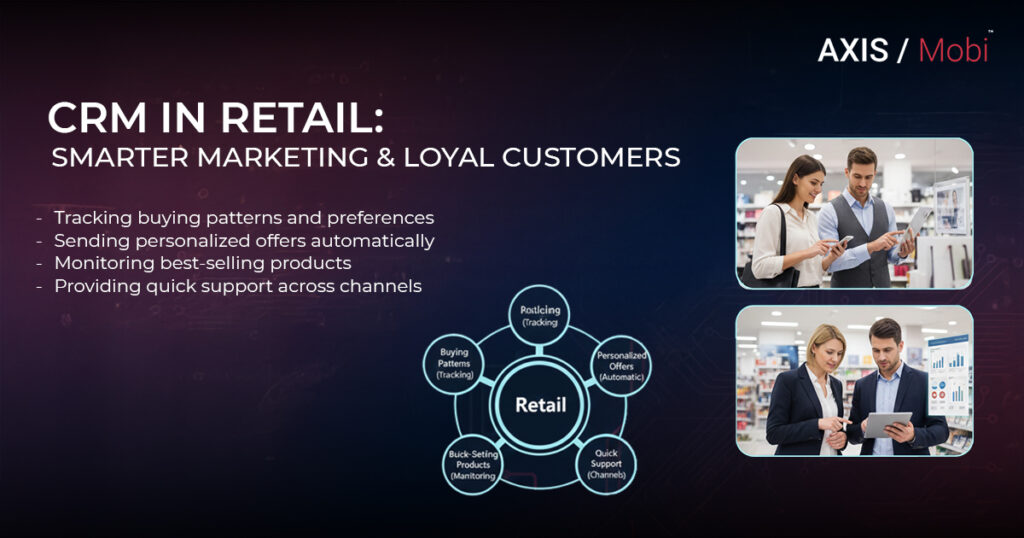
Retail in 2025 was all about personalization.
A CRM helped brands understand their customers better and respond at the right time.
Retail teams used CRM for:
- Tracking buying patterns and preferences
- Sending personalized offers automatically
- Monitoring best-selling products
- Providing quick support across channels
The moment someone started scrolling through a store, the CRM got to work – spotting their favorite categories, sending timely offers, showing the team what was trending, and pulling up customer details the second they reached out for help.
It was like giving the retail business a built-in marketing and support engine.
Testimonial / Feedback:
“OSPA Boutique used Mailchimp + CRM to automate marketing and saw their customer retention improve and sales grow significantly.” – case study on Retail CRM
This shows how combining CRM + marketing automation helped a retail brand convert more visitors into loyal customers.
5. Manufacturing: Streamlined Orders & Stronger Dealer Relations
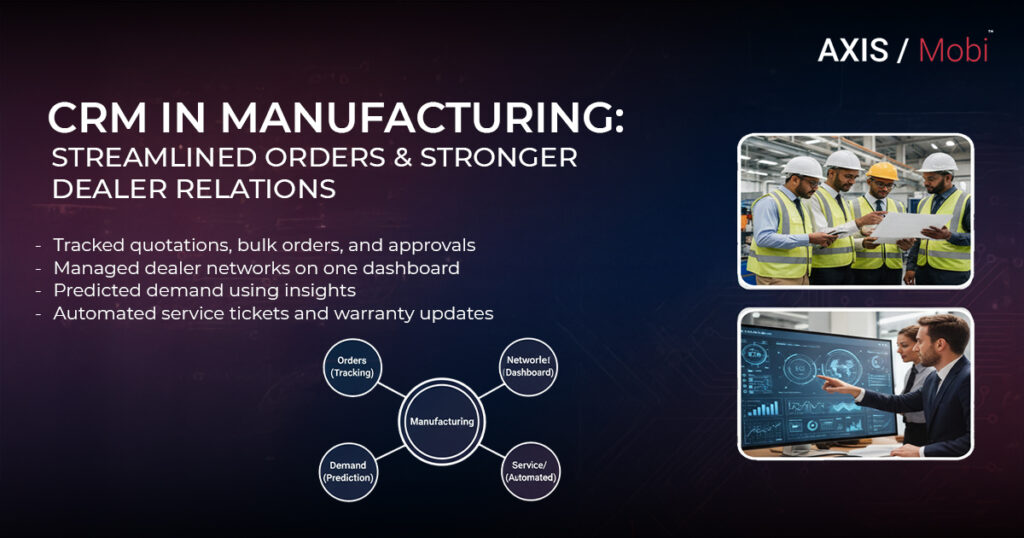
Manufacturers dealt with long sales cycles, multiple partners, and service requests.
A CRM kept everything running smoothly.
Key benefits:
- Tracked quotations, bulk orders, and approvals
- Managed dealer networks on one dashboard
- Predicted demand using insights
- Automated service tickets and warranty updates
A dealer requested pricing, another asked for a shipment update, and a customer logged a service issue – instead of juggling spreadsheets, the CRM showed it all clearly in one dashboard. Approvals moved faster, service reminders went out on time, and the sales team always knew what to prioritize.
The result: steady processes and stronger dealer trust.
Testimonial / Feedback:
From real-world CRM providers for manufacturing, clients often report:
“Our sales cycle speeded up and dealer communication became more predictable and reliable: no more lost orders or missed follow-ups.”
Though exact names are often confidential, such feedback is consistently cited by CRM consulting firms working with manufacturing clients. (E.g., streamlined workflows, better dealer relations, fewer manual errors.)
6. IT & Tech: Clear Communication & On-Track Projects
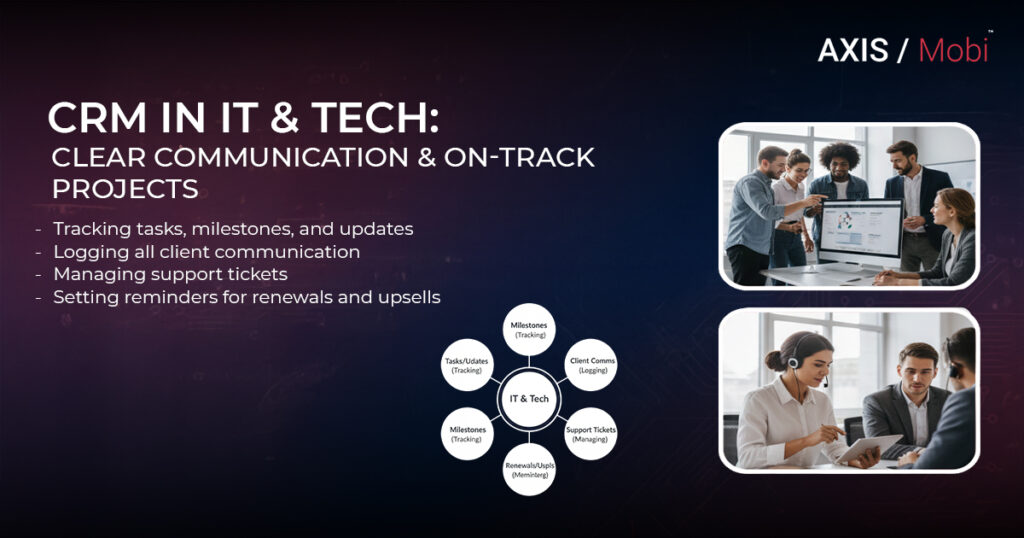
Tech teams juggled multiple clients, sprints, deadlines, and support tickets.
A CRM kept all project details and communication organized.
Helpful features included:
- Tracking tasks, milestones, and updates
- Logging all client communication
- Managing support tickets
- Setting reminders for renewals and upsells
With multiple projects running, clients pinging on different channels, and deadlines piling up – instead of chaos, the CRM mapped everything clearly. Every call, message, task, and milestone sat in one place, so nothing got lost and follow-ups never slipped through.
Work felt lighter, and communication stayed crisp.
Testimonial/feedback:
“By migrating to IT/Tech CRM, we significantly simplified our sales and account‑management workflows, we retained our established processes but eliminated most manual customizations.” – Itransition case study for a global software‑engineering company.
7. Real Estate: Better Follow-Ups & Faster Closures
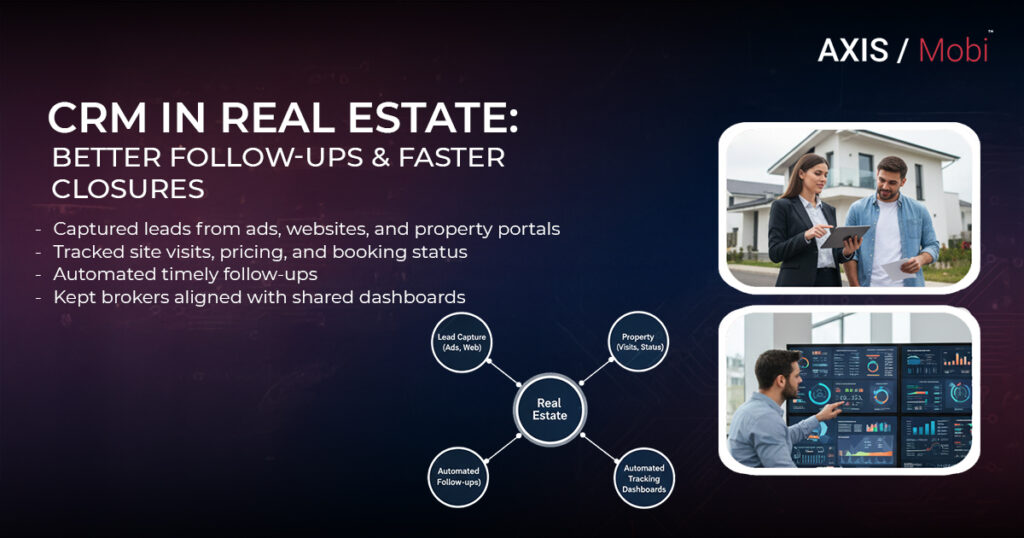
Real estate moved quickly.
A CRM made sure no lead slipped away.
How it helped:
- Captured leads from ads, websites, and property portals
- Tracked site visits, pricing, and booking status
- Automated timely follow-ups
- Kept brokers aligned with shared dashboards
Ad leads, WhatsApp messages, website forms – instead of scattering everywhere, everything landed neatly in the CRM. The team knew who to call, when to schedule visits, and what stage each buyer was at. Brokers stayed in sync, and follow-ups always went out on time.
The whole sales journey felt organized and stress-free.
Testimonials/feedback:
“The solution streamlined our business processes, improved communication, and helped us eliminate manual work.”
Final Thoughts
Across industries, one thing was clear:
Customers expected speed, clarity, and personalized attention.
A CRM tied all these expectations together by giving businesses better visibility, automation, and smarter workflows.
With our CRM solution, teams work faster, customers stay happier, and businesses grow without chaos.